How VR and AR Are Moving Beyond Gaming Into Everyday Applications
Table of Contents
Introduction
Technology is changing how people work, learn, shop, and stay in touch with others. Many people once linked VR and AR only with gaming, but that idea is changing fast. Today, these tools are becoming part of daily life and helping both businesses and people solve real-world problems.
At WikiGlitz, we believe technology should make life easier, smarter, and more useful. From education to healthcare, VR and AR are opening new doors that were hard to imagine just a few years ago. As devices get cheaper and software gets better, these tools are moving from fun use into everyday routines.
In this article, we will look at how VR and AR are changing different industries, why businesses are investing in them, and what the future may look like.
What Are VR and AR?
Before looking at their daily uses, it helps to know the difference.
Virtual Reality (VR) creates a fully immersive digital world where users wear a headset and step into a computer-generated space. It replaces the real world with a virtual one.
Augmented Reality (AR) adds digital objects, facts, or images to the real world using phones, tablets, or smart glasses. Instead of replacing reality, it adds to what users already see.
Together, VR and AR are changing how people use digital content in ways that feel simple, natural, and useful.
Why VR and AR Are Growing Beyond Gaming
Gaming helped millions of people learn about VR and AR, but businesses soon realized these tools could also solve everyday problems.
Several things have helped them grow:
- Better and lighter devices
- Faster internet speeds
- Lower hardware prices
- Better software tools>
- Higher demand for digital experiences
Because of these changes, companies are finding practical uses for VR and AR that improve work, customer service, and learning.
1. Education Is Becoming More Interactive
Schools and colleges are using VR and AR to make learning more active and fun.
Instead of only reading from books, students can visit old cities, take part in virtual science tests, or study the human body in 3D. This helps learners understand hard topics more easily.
Many virtual reality applications are now made for classrooms, where students can practice skills in a safe way without costly tools.
Teachers also gain from this because lessons become more lively and easier to remember.
2. Healthcare Is Improving Patient Care
Healthcare has become one of the fastest-growing areas for VR and AR.
Doctors use VR simulations to practice surgery before they work on real patients. Medical students can learn body parts through interactive models instead of only using books.
AR helps surgeons by showing key patient details during operations.
Patients also benefit from pain relief, mental health care, and physical therapy programs.
These useful VR and AR applications improve accuracy while lowering risk.
Related Article: Learning in 3D: The Growing Role of VR and AR in Education and Training
3. Shopping Has Become More Personalized
Online shopping is changing because of VR and AR.
Customers no longer need to guess how furniture will look in their homes or whether glasses will suit their faces.
Using AR, shoppers can:
- Try clothes virtually
- Preview furniture in their living rooms
- Test makeup before buying
- See home decor ideas.
These virtual and augmented reality experiences help people make better buying choices while also lowering product returns.
Retail brands are investing a lot because customers enjoy more interactive shopping.
4. Real Estate Offers Better Property Tours
Buying a home often takes many visits. Today, VR and AR are making that process much easier.
VR lets buyers walk through homes from almost anywhere in the world.
AR helps people see where furniture may go, how a room may look after changes, or what a new design might feel like before they decide.
Real estate companies save time, while buyers get a clearer view of the property without a long travel.
This is one of the fastest-growing virtual reality applications in the property market.
5. Manufacturing Is Becoming Smarter
Factories use VR and AR to improve speed, safety, and work quality.
Workers can get virtual training before they use costly machines.
AR can show repair steps right on the equipment, which helps reduce mistakes and speeds up fixes.
Many businesses also use immersive technology to test production lines before they build them, which helps engineers spot problems early.
These changes lower costs while improving product quality.
6. Workplace Training Is More Effective
Old-style employee training often needs classrooms, printed guides, and travel.
Now, VR and AR offer real work simulations where employees can safely practice hard tasks.
Industries that benefit include:
- Aviation
- Construction
- Manufacturing
- Customer service
- Emergency response
Because people learn by doing, they remember more and learn faster.
Many companies now see AR and VR technology as an important part of staff training and growth.
7. Tourism and Travel Are Becoming More Engaging
Travel companies use VR and AR to help people explore places before they book a trip.
Hotels offer virtual room tours.
Museums use AR guides that show more facts about exhibits.
Tourists can use their phones to see maps, signs, and translations in a more helpful way.
These tools improve trip planning while giving visitors a more memorable experience through immersive technology.
8. Architecture and Interior Design
Architects no longer depend only on blueprints.
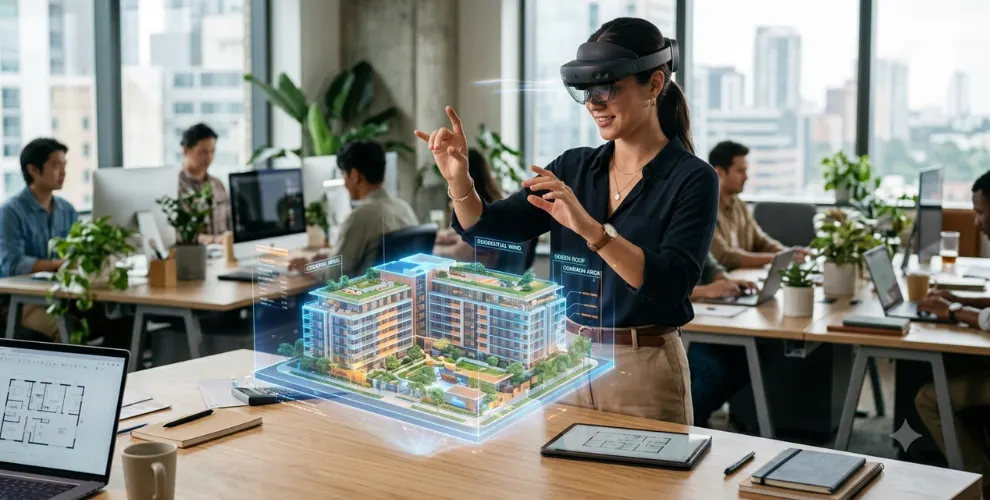
Using VR and AR, clients can walk through buildings before construction starts.
Interior designers use AR to show different furniture layouts, wall colors, lights, and decor choices.
This cuts down on confusion and helps clients make faster choices.
Many AR/VR companies now focus on building design and visual planning tools.
9. Entertainment Beyond Video Games
Even though gaming helped many people discover VR and AR, entertainment has grown far beyond games.
People now attend:
- Virtual concerts
- Digital museums
- Interactive sports events
- Live shows
- Virtual movie screenings
These new experiences let people join from anywhere while still feeling part of the event.
The entertainment world keeps creating new VR and AR applications for people around the globe.
10. Remote Collaboration Is Changing Work
Remote work has increased the need for better team tools.
Instead of only joining normal video calls, teams can meet in shared virtual spaces.
Workers can talk with digital models, slides, and files in real time.
Many businesses believe virtual and augmented reality will play a big role in future offices because it helps teams communicate better, even when they are far apart.
The Growing Role of AR VR Companies
The need for new ideas has pushed many AR/VR companies to grow their services.
These companies build tools for:
- Healthcare
- Retail
- Manufacturing
- Education
- Real estate
- Automotive
- Tourism
As hardware becomes cheaper, even small businesses can start using these tools.
This fast growth is creating new jobs, new software platforms, and fresh business opportunities.
Challenges That Still Exist
Although VR and AR keep growing, some problems still remain.
Device Cost
High-quality headsets can still cost too much for many people and small businesses.
Content Development
Making realistic experiences takes skilled developers and designers.
User Comfort
Some users feel motion sickness during long VR sessions.
Privacy Concerns
AR devices often collect data from the space around them, which raises questions about privacy and data safety.
Even with these issues, the technology keeps improving each year.
What the Future Looks Like
Experts believe VR and AR may become as common as smartphones in the next ten years.
Future changes may include:
- Smarter wearable devices
- AI-powered virtual helpers
- Better mixed reality tools
- Lower-cost consumer hardware
- Faster cloud-based processing
As immersive technology keeps improving, people will use it every day for work, learning, shopping, communication, and fun.
Businesses that invest now are getting ready for a future where digital experiences are part of normal life.
Conclusion
The growth of VR and AR has moved far beyond gaming. These tools now help doctors care for patients, teachers guide students, retailers improve shopping, architects plan buildings, and companies train workers more effectively.
At WikiGlitz, we keep track of the latest tech trends and new ideas that shape our digital future. As VR and AR become cheaper and easier to use, they will keep changing daily life across many industries. Whether you are a business owner, student, or tech fan, now is a great time to learn how these tools are changing the world around us.
Frequently Asked Questions
1. What industries are using VR and AR besides gaming?
Today, VR and AR are used in healthcare, education, manufacturing, retail, tourism, architecture, real estate, and employee training.
2. How do virtual reality applications help businesses?
Virtual reality applications help with employee training, product demos, customer engagement, design planning, and remote teamwork while also lowering costs.
3. Are VR and AR expensive for small businesses?
The cost has gone down in recent years. Many low-cost devices and software tools now let small businesses use AR and VR technology without a huge budget.
4. What is the difference between virtual reality and augmented reality?
Virtual Reality creates a fully digital world, while Augmented Reality adds digital details to the real world through phones, tablets, or smart glasses.
5. Why are companies investing in immersive technology?
Businesses invest in immersive technology because it improves customer experience, raises worker output, supports better training, improves product views, and helps create new digital solutions that support growth.