
Learning in 3D: The Growing Role of VR and AR in Education and Training
Table of Contents
Introduction
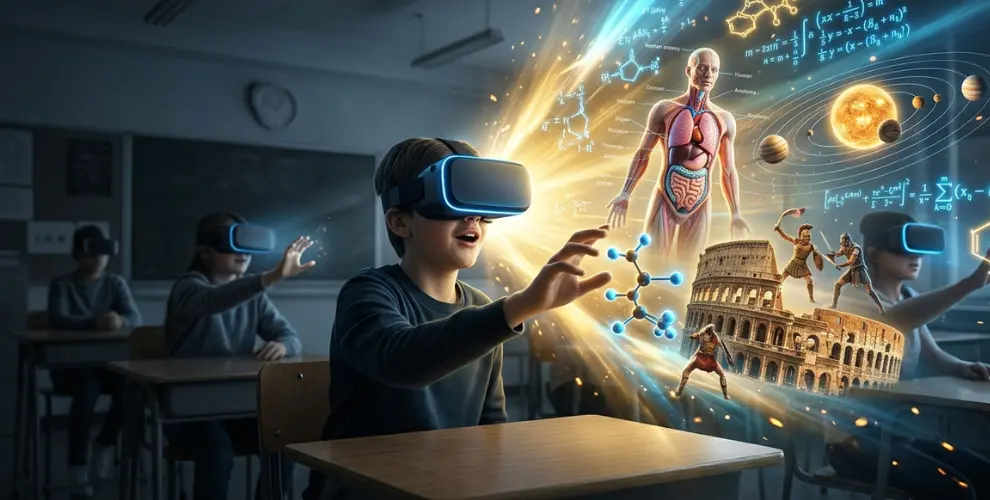
Learning has changed a lot in recent years. Today, learners want more than books or videos. They want lessons that feel real and interesting.
This is where VR and AR are playing an important role. These tools help learners understand topics by experiencing them, not just reading about them.
At Wikiglitz, we study how digital tools improve learning systems. One trend is very clear.
VR and AR are now used in classrooms, training centers, and workplaces. They are not just new ideas. They are changing how people learn, practice skills, and improve knowledge.
What VR and AR Mean for Learning
Virtual Reality creates a digital space where learners feel fully involved. Augmented Reality adds digital objects to the real world using mobile devices or screens.
Together, VR and AR create learning spaces that are interactive and easy to understand.
These tools do not replace teachers. Instead, VR and AR help teachers explain lessons better.
They make learning visual, simple, and practical. Learners understand concepts without feeling confused.
Why Traditional Learning Needs Support
Many learners find it hard to stay focused in traditional classes. Long lectures and heavy textbooks can feel boring. VR and AR help solve this problem by making learning active.
When learners explore and interact, they learn better. Today’s education and training value real skills more than memorized information, and this method supports that.
How Immersive Learning Improves Understanding
Learning becomes easier when learners can see and interact with ideas. VR and AR help turn complex topics into simple experiences.
A physics student can see how forces move. A medical student can study the human body in detail.
This hands-on approach reduces confusion. Learners do not just remember facts. They understand how things work in real life.
Improving Student Engagement in Classrooms
Keeping students interested is a common challenge in schools and colleges. VR and AR help increase attention by making lessons interactive.
History comes alive when students experience it instead of only reading about it. Geography lessons become virtual trips. This keeps learners curious and motivated, which leads to better results.
Supporting Different Learning Styles
Not all learners learn the same way. Some learn by seeing. Others learn by doing. VR and AR support many learning styles at once.
Visual learners benefit from 3D images. Hands-on learners gain from interaction. This makes immersive learning useful for many students and training groups.
Role of VR and AR in Skill-Based Education
Skill-based learning needs practice. VR and AR allow learners to practice safely many times. Making mistakes is part of learning, not a risk.
This is very helpful in fields that need accuracy. Medical, technical, and safety training programs use immersive simulations to prepare learners before real work.
Applications in Higher Education
Colleges and universities now use VR and AR for advanced subjects. Engineering students use simulations to study structures. Medical students practice procedures in virtual settings.
Institutions using VR and AR in education often see better understanding and fewer learning gaps. Students feel more confident when lessons connect theory with practice.
Corporate Training and Workforce Development
Many companies use VR and AR to train employees. New staff can explore workspaces before starting their jobs. Safety training feels real without danger.
Leadership training also improves through simulations. Learners make decisions and see results. This helps employees learn faster and remember more.
Making Learning Accessible and Inclusive
One major benefit of immersive learning is accessibility. VR and AR help learners who face physical or distance challenges.
Students in remote areas can join virtual classrooms. Visual learning also reduces language barriers. This makes education and training more fair and inclusive.
Real-World Use of Immersive Learning
Today, VR and AR are used across many industries. Technical institutes use AR/VR learning for machine training. Healthcare centers use simulations for medical practice.
These examples show that immersive learning works. It is not just an experiment. It is already helping learners gain real skills.
Building Trust Through Expert Content
Trust is important in learning. Content used in VR and AR must be correct and reliable. Educational institutions work with subject experts to create accurate lessons.
This expert approach supports EEAT standards. Learners trust immersive tools because they are based on real knowledge and experience.
Data, Feedback, and Learning Improvement
Another benefit of VR and AR is feedback. Trainers can track how learners perform tasks and make decisions.
This data helps improve learning programs. Learners get clear feedback on what they need to improve. This makes learning more personal and effective.
Challenges and Responsible Adoption
Like all technology, VR and AR have challenges. Devices cost money. Content creation takes time. Teachers need training.
Still, technology is becoming more affordable. Easy-to-use platforms help institutions adopt immersive learning smoothly with proper planning.
The Future of Learning in 3D
The future of learning will mix traditional methods with immersive tools. VR and AR will not replace classrooms. They will support and improve them.
As technology improves, immersive learning will feel natural. Learners will expect interactive lessons as part of everyday learning.
Long-Term Impact on Education and Training
Over time, VR and AR will support lifelong learning. From schools to workplaces, immersive tools will help people update skills continuously.
This change supports the global need for skilled and adaptable learners. Learning through experience will become normal.
Conclusion
Learning in 3D is changing how people gain knowledge and skills. With VR and AR, learning becomes interactive, practical, and easier to remember. Learners understand faster and practice safely.
At Wikiglitz, we believe real learning comes from real experiences. As immersive technology grows, VR and AR will continue to shape the future of education and training for all learners.
Frequently Asked Questions
1. How do VR and AR help learners understand complex topics faster?
They turn difficult ideas into visual and interactive experiences. Learners can see how things work instead of imagining them, which improves clarity and understanding.
2. Do learners need technical skills to use VR and AR tools?
No. Most platforms are designed to be user-friendly. Students and trainees can use them easily with basic guidance from teachers or trainers.
3. Can VR and AR be used for short-term training programs?
Yes. They are very effective for short courses because learners can practice skills quickly and gain confidence in less time.
4. How do immersive tools improve focus during learning sessions?
Interactive environments reduce distractions. When learners actively engage with content, their attention stays longer compared to traditional methods.
5. Are VR and AR suitable for assessment and evaluation?
Yes. Trainers can track performance, decision-making, and task completion, which helps measure real skill development accurately.
Want to keep up with our blog?
Our most valuable tips right inside your inbox, once per month.


WikiGlitz Team
Welcome to WikiGlitz, your ultimate destination for tech insights and innovation. Our expert team is dedicated to delivering free resources and professional advice on various technology topics, including Artificial Intelligence, Cyber Security, Cloud Computing, and more. We strive to empower our readers with up-to-date information and practical guidance, ensuring you stay ahead in the rapidly evolving tech landscape. At WikiGlitz, we are passionate about making complex technology accessible to everyone. Our team of seasoned experts curates content that is both informative and engaging, helping you understand and leverage the latest tech trends. Whether you're a tech enthusiast or a professional, WikiGlitz is your go-to source for reliable, expert-driven content. Join us on this journey to explore and embrace the future of technology.