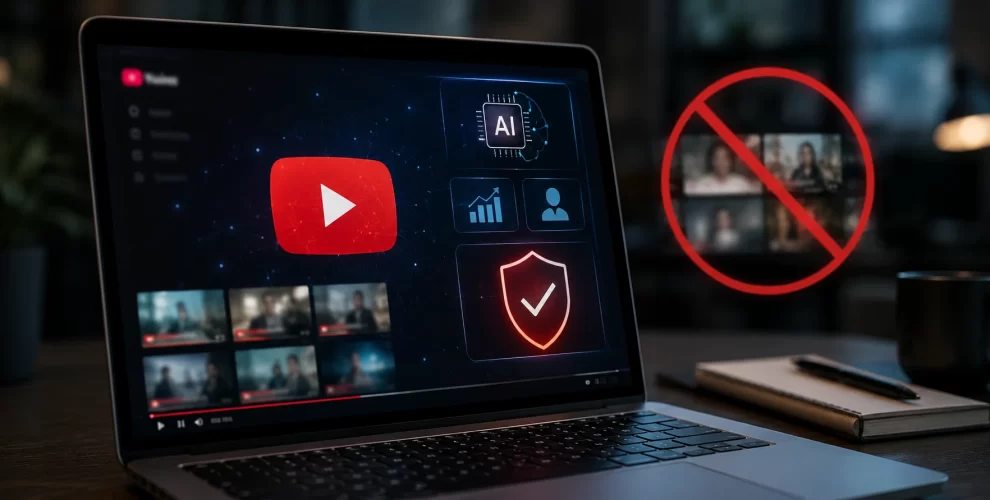
YouTube Updates AI Content Monetization Rules to Reduce Low-Quality Videos
YouTube has updated its monetization policies to make it clearer which types of AI-generated and low-quality videos are no longer eligible to earn revenue through the YouTube Partner Program (YPP).
The update is designed to encourage original content while reducing content created only to attract views and ad revenue.
The company says this is a clarification of its existing rules rather than a completely new policy.
The goal is to ensure creators produce meaningful, creative videos instead of relying on repetitive AI-generated content.
Three Types of Content Affected
Under the updated guidelines, YouTube has identified three categories of content that may not qualify for monetization:
- Generic or repetitive content: Videos created using templates, AI tools, or copied formats with little originality.
- Distressing or manipulative content: Videos designed to shock viewers or exploit emotional situations simply to increase views.
- AI personas discussing sensitive topics: AI-generated personalities giving advice on areas such as health, finance, legal matters, or medical issues.
Channels that frequently publish these types of videos could lose access to monetization through the YouTube Partner Program.
AI Can Still Be Used Creatively
YouTube is not banning AI-generated content.
Instead, the platform says AI is welcome when it helps creators produce original, engaging, and valuable videos.
The company wants creators to use AI as a creative tool rather than a shortcut for mass-producing nearly identical videos.
High-quality AI-assisted content can still qualify for monetization if it adds genuine value for viewers.
Why This Update Matters
With AI tools making content creation faster than ever, YouTube wants to protect the quality of videos available on its platform.
Clearer guidelines also help advertisers feel more confident that their ads appear alongside trustworthy and engaging content.
For creators, this means focusing on originality, storytelling, and authentic ideas instead of relying on automated content generation.
Conclusion
YouTube’s latest policy update reinforces that originality remains important, even as AI becomes a bigger part of content creation.
Creators who use AI responsibly to improve their videos can continue earning revenue, while channels built around repetitive or misleading content may face monetization restrictions.