ICE Tells Employees Not to Wear Meta Smart Glasses While on Duty
Table of Contents
ICE Tells Employees Not to Wear Meta Smart Glasses While on Duty
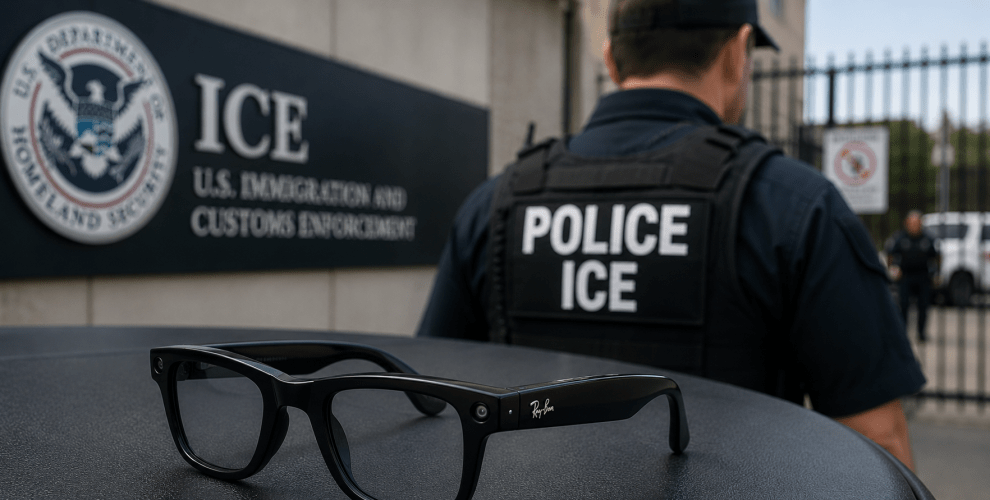
U.S. Immigration and Customs Enforcement (ICE) has instructed employees not to use Meta smart glasses while working, citing concerns that the devices could capture or transmit sensitive information.
The instruction applies across the agency, not only to officers working in the field. The Department of Homeland Security (DHS) says the memo clarifies an existing rule that prevents employees from using personally owned body-worn cameras while on duty.
Key Takeaways
- ICE employees have been told not to wear Meta smart glasses while working.
- The guidance covers the agency’s entire workforce.
- ICE considers camera-equipped smart glasses similar to personally owned body-worn cameras.
- The agency says personal recording devices could expose sensitive or legally protected information.
- Official ICE body-camera policies require approved, agency-issued equipment.
- Separately, DHS has requested funding to develop its own smart-glasses prototypes for immigration officers.
Why Has ICE Restricted Meta Smart Glasses?
The concern centers on what the glasses can capture while an employee is working.
Ray-Ban Meta smart glasses contain cameras and microphones and can record from the wearer’s point of view. According to the ICE memo, devices of this kind could unintentionally record or transmit information that should remain protected.
That creates an obvious problem in environments where employees may encounter private conversations, personal information, law-enforcement records, or other sensitive material.
Does the Rule Apply Only to ICE Agents in the Field?
No. The instruction reportedly applies to all ICE employees, including people who aren’t conducting field operations.
DHS told reporters that personally owned body-worn cameras were already prohibited. In that sense, the new memo appears to clarify how the existing policy applies to smart glasses rather than introduce an entirely new restriction.
Why Are Meta Glasses Being Treated Like Body Cameras?
The glasses may look like ordinary eyewear, but they contain technology capable of recording what the wearer sees and hears.
That makes them different from regular prescription glasses or sunglasses in a workplace setting.
ICE’s concern is therefore less about the Meta brand itself and more about employees carrying a personal recording device while performing official duties.
The issue has become more visible as immigration personnel have reportedly been spotted wearing smart glasses during operations.
Is DHS Developing Its Own Smart Glasses?
This is where the story becomes more interesting.
While ICE is restricting employees from using personally owned Meta glasses, DHS has separately sought funding to develop official smart-glasses prototypes for immigration operations.
DHS requested about $7.5 million for research and development projects that include smart glasses capable of giving personnel access to biometric identification information in the field.
The distinction is important.
ICE isn’t necessarily rejecting smart glasses as a technology. The restriction concerns personally owned consumer devices that aren’t controlled by the agency.
An official system could be developed around government security requirements, approved data handling, access controls, and operational policies.
Why Are Smart Glasses Raising Privacy Questions?
Smart glasses create a different privacy challenge from smartphones because recording technology can be built into something that resembles ordinary eyewear.
Ray-Ban Meta glasses include an indicator light intended to show when recording is active. Even so, privacy advocates have raised concerns about whether people nearby always realize they are being recorded. Similar concerns have also led to legal scrutiny outside the United States.
That doesn’t mean smart glasses are inherently harmful. They can also provide valuable accessibility features, including hands-free assistance for people with disabilities.
The challenge is deciding where and how camera-equipped wearables should be used when sensitive information is involved.
Does This Mean Meta Smart Glasses Are Banned in the U.S.?
No.
This is an ICE workplace policy, not a nationwide ban on Meta’s glasses.
Consumers can still use Meta smart glasses subject to applicable laws and restrictions. The ICE guidance concerns employees using personally owned recording devices while performing official work.
Why Does This Matter?
The ICE memo highlights a workplace issue that could become increasingly common as AI wearables become mainstream.
A pair of glasses can now contain cameras, microphones and AI features while looking similar to conventional eyewear. Organizations dealing with confidential information may therefore need clearer rules about when such devices can be worn and what they are allowed to record.
For government agencies, healthcare providers, companies and other sensitive workplaces, smart-glasses policies could eventually become as normal as existing rules around personal phones and cameras.
Conclusion
ICE’s decision isn’t simply about Meta or a particular pair of glasses. It reflects a larger challenge created by increasingly discreet wearable technology.
Consumer smart glasses can capture useful information, but that capability becomes complicated in workplaces handling sensitive data. ICE’s answer is to keep personally owned recording devices out while DHS separately explores what an officially controlled version of the technology could look like.
FAQs
1. Can ICE agents wear Meta smart glasses while working?
No. ICE has instructed employees not to use Meta smart glasses or similar personally owned recording devices while on duty.
2. Why did ICE restrict Meta smart glasses?
ICE says the devices could unintentionally capture, record, or transmit sensitive information, potentially creating privacy and legal concerns.
3. Does the Meta glasses restriction apply to every ICE employee?
Yes. Reporting indicates that the guidance applies across the agency, including employees who don’t work in field operations.
4. Are Meta smart glasses banned for everyone in the United States?
No. The restriction concerns ICE employees while working. It is not a nationwide consumer ban.
5. Is DHS developing smart glasses for ICE?
DHS has requested approximately $7.5 million for research and development projects that include smart-glasses prototypes designed to provide biometric identification capabilities in the field.
6. What’s the difference between Meta glasses and DHS smart glasses?
Meta’s glasses are consumer products. The proposed DHS system would be purpose-built government technology intended for official operations and biometric identification.