
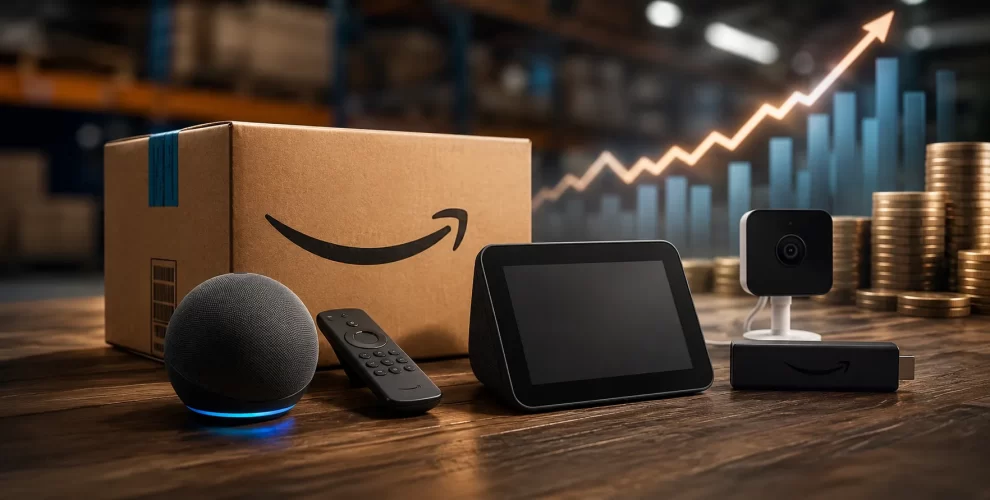
Amazon Raises Hardware Prices by Up to 60% as Memory Costs Surge
Table of Contents
Amazon Raises Hardware Prices by Up to 60% as Memory Costs Surge
Amazon has sharply increased prices across several of its popular consumer devices, with some products now costing as much as 60% more.
The increases affect products including Echo smart speakers, Kindle e-readers, Fire TV devices, and eero Wi-Fi systems. Amazon says rising memory and storage component costs are behind the changes.
The move is another sign that the memory shortage linked partly to booming AI infrastructure demand is beginning to affect everyday consumer electronics.
Key Takeaways
- Amazon has raised prices across several of its hardware categories.
- The Echo Dot jumped from $49.99 to $79.99, a 60% increase.
- The base Kindle rose from $109.99 to $149.99.
- Kindle Paperwhite increased from $159.99 to $199.99.
- Fire TV devices and eero networking products also became more expensive.
- Amazon blamed significant increases in memory and storage costs.
- Some Amazon devices, including Ring products and the Echo Studio, were not affected.
- Other technology companies are also dealing with higher component costs.
Why Did Amazon Increase Its Hardware Prices?
Amazon says the main reason is the rising cost of memory and storage components.
Modern electronics depend heavily on DRAM, NAND flash, and other forms of memory. Demand for these components has increased significantly as technology companies build massive AI infrastructure.
At the same time, memory manufacturers have shifted more production toward higher-value components used in AI servers.
The result is tighter supply and higher costs for manufacturers producing ordinary consumer electronics.
Amazon said it had absorbed these higher costs for as long as possible before adjusting prices.
How Much Did Amazon Device Prices Increase?
The size of the increase varies significantly between products.
The biggest jump is on the entry-level Echo Dot, which increased from $49.99 to $79.99.
That’s a 60% increase.
Other notable changes include the base Kindle moving from $109.99 to $149.99, while the Kindle Paperwhite increased from $159.99 to $199.99.
Fire TV products were also affected. Some models experienced considerably larger increases than others.
These changes are particularly noticeable because Amazon has historically used relatively affordable hardware to bring more people into its ecosystem.
Which Amazon Devices Are Getting More Expensive?
The increases cover several major Amazon product families:
- Echo smart speakers and displays
- Kindle e-readers
- Fire TV streaming devices
- eero Wi-Fi systems
However, not every Amazon product received a price increase.
The Echo Studio and Amazon’s Ring-branded devices reportedly retained their existing prices.
That suggests Amazon is adjusting prices selectively based on component costs and individual product economics rather than applying the same percentage increase across its entire hardware portfolio.
Why Did the Echo Dot Price Rise 60%?
The Echo Dot stands out because it received the largest percentage increase among the widely reported changes.
Its price moved from $49.99 to $79.99.
Historically, inexpensive Echo devices have helped Amazon introduce more households to Alexa and its wider ecosystem.
A 60% increase therefore changes the value proposition of what was previously one of Amazon’s more accessible smart-home products.
It also demonstrates how rising component costs can have a particularly large impact on cheaper devices, where manufacturers have less room to absorb additional expenses.
What Does AI Have to Do With the Memory Shortage?
AI systems require enormous amounts of computing hardware.
The data centers training and running advanced AI models need large quantities of high-performance memory alongside GPUs and other specialized chips.
As demand from AI infrastructure grows, memory manufacturers have an incentive to prioritize more profitable products used by data centers.
That can tighten the supply available for PCs, smartphones, smart-home products, and other consumer electronics.
TechCrunch describes the current memory shortage as being fueled by the AI boom, with rising costs now being passed from hardware manufacturers to consumers.
Is Amazon the Only Company Raising Hardware Prices?
No.
Amazon’s increases are part of a broader industry problem.
Other technology companies have also adjusted hardware pricing as memory and storage costs rise. Fortune notes similar moves from companies including Apple, Dell, and Microsoft’s Xbox business.
That makes Amazon’s decision more significant than a simple change in one company’s pricing strategy.
It suggests higher component costs are increasingly reaching consumer products.
Could More Electronics Become Expensive?
Potentially.
Memory is used in almost every modern computing device, including smartphones, laptops, gaming systems, televisions, tablets, and smart-home hardware.
If memory prices remain elevated, manufacturers generally have three choices:
Absorb the additional cost, reduce their margins, or increase retail prices.
Large companies may be able to absorb temporary increases. But prolonged shortages make that increasingly difficult.
Amazon’s decision suggests some manufacturers have reached the point where passing part of the additional cost to consumers is becoming necessary.
Is This a Bad Time to Buy Consumer Hardware?
For some products, waiting for discounts could make sense.
Amazon says keeping products accessible remains important and that it plans to continue offering promotions throughout the year.
That means the new list prices may not always be the prices customers actually pay during major sales.
However, consumers shouldn’t automatically assume older prices will return soon.
If memory and storage costs remain high, elevated hardware pricing could continue across the industry.
Could Amazon Lower Prices Again?
Amazon has not announced when—or whether—the affected devices will return to their previous prices.
Component shortages are difficult to predict because pricing depends on manufacturing capacity, AI infrastructure demand, inventory levels, and broader supply-chain conditions.
Amazon could also use promotional discounts to temporarily reduce prices without officially reversing the new list prices.
For buyers, that makes major sale periods potentially more important than before.
Why Do Amazon’s Price Hikes Matter?
Amazon built much of its hardware strategy around affordability.
Products such as Echo speakers and Fire TV devices were relatively inexpensive ways to bring customers deeper into Amazon’s ecosystem.
Large price increases could change that strategy.
More importantly, Amazon’s move shows how the enormous investment flowing into AI infrastructure can indirectly affect people who aren’t buying AI products at all.
A consumer shopping for an e-reader or smart speaker may now encounter higher prices partly because the technology industry needs far more memory for AI computing.
Conclusion
Amazon’s hardware price increases are one of the clearest consumer-facing effects yet of rising memory costs.
Popular products including Echo, Kindle, Fire TV, and eero devices have become more expensive, with the Echo Dot seeing the largest reported increase at 60%.
Amazon says higher memory and storage costs forced the changes after the company absorbed those expenses for as long as it could.
The bigger question is whether this is temporary.
If AI infrastructure continues consuming an increasing share of memory production, Amazon may not be the last major hardware company forced to rethink its prices.
FAQs
1. Why did Amazon increase its hardware prices?
Amazon says significant increases in memory and storage component costs forced it to raise prices on several devices.
2. How much did the Amazon Echo Dot price increase?
The Echo Dot increased from $49.99 to $79.99, representing a 60% increase.
3. Which Amazon products became more expensive?
Price increases affect several Echo, Kindle, Fire TV, and eero products. Not every Amazon hardware product was affected.
4. How much does the Kindle cost after the increase?
The base 16GB Kindle increased from $109.99 to $149.99, while the Kindle Paperwhite rose from $159.99 to $199.99.
5. Is AI responsible for Amazon’s price increases?
Amazon specifically blamed higher memory and storage costs. The broader memory shortage is being intensified by strong demand for components used in AI infrastructure.
6. Are all Amazon devices becoming more expensive?
No. Some products, including Ring devices and the Echo Studio, reportedly retained their existing prices.
7. Will Amazon hardware prices come down again?
Amazon has not announced a return to previous list prices. The company says it will continue running promotions, so individual devices may still be available at discounted prices during sales.