Bill Gates Warns the World Isn’t Ready for the AI Era
Table of Contents
Bill Gates Warns the World Isn’t Ready for the AI Era
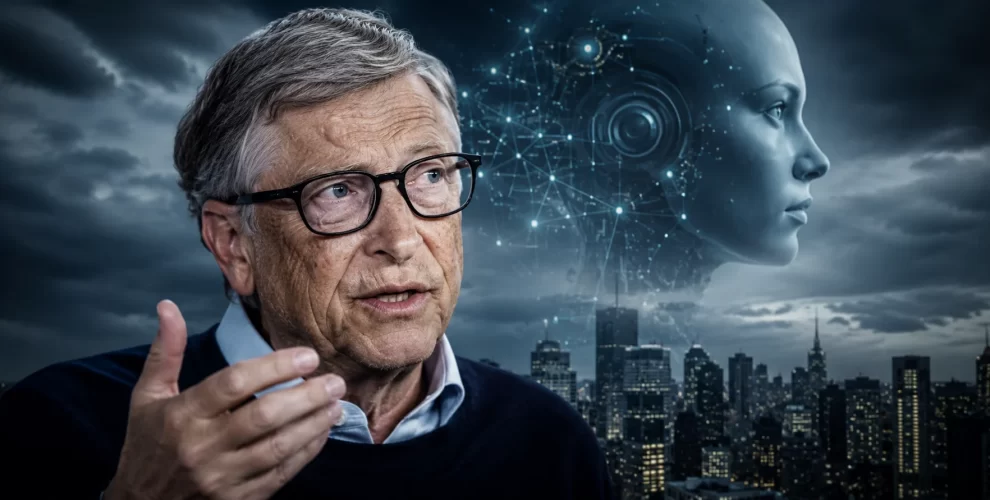
Bill Gates has issued one of his strongest warnings yet about artificial intelligence, arguing that AI is advancing faster than governments, businesses, and society are preparing for its consequences.
In a new 12-page essay, Gates says AI still has enormous potential in areas such as healthcare, agriculture, education, and energy.
But he believes the transition could also become one of the most disruptive periods in modern history if governments fail to prepare for job losses, security threats, misinformation, and social instability.
His central concern is simple: AI development is moving quickly, but society does not yet have a clear plan for managing what comes next.
Key Takeaways
- Gates warns that AI could disrupt both white-collar and blue-collar employment.
- Entry-level and mid-level jobs may face some of the earliest pressure.
- Robotics could bring AI-driven automation deeper into physical jobs.
- Gates wants governments to consider protecting certain roles specifically for humans.
- He has proposed taxes on AI usage and robots to help fund worker support and retraining.
- He is concerned about AI’s effects on critical thinking, misinformation, cybersecurity, mental health, and biological threats.
- Gates wants stronger national regulation and international cooperation, including between the U.S. and China.
- Despite the risks, he remains optimistic about AI’s potential benefits if the transition is managed properly.
Why Is Bill Gates Warning About AI Now?
Gates has been optimistic about artificial intelligence for years.
In 2023, he described AI as a technological revolution comparable to personal computers and the internet. He argued that its risks were serious but manageable with the right policies and safeguards.
His latest message is noticeably more urgent.
The problem isn’t that Gates suddenly believes AI has no benefits. Instead, he thinks society is moving too slowly compared with the technology itself.
AI capabilities are improving rapidly while governments are still debating how workers, schools, businesses, and communities should adapt.
Gates believes the window for preparing before major disruption occurs is getting smaller.
What Does Gates Think Will Happen to Jobs?
Employment is one of Gates’ biggest concerns.
AI has already begun changing software development, customer service, legal work, content creation, and other knowledge-based professions.
Gates believes that disruption will spread much further.
As robotics improves and becomes cheaper, automation could increasingly affect physical jobs in industries such as manufacturing, construction, hospitality, and logistics.
What makes this transition different from previous technological shifts is speed.
Major economic transitions in the past often happened over generations. Gates believes AI could transform several industries within roughly a decade.
Could AI Eventually Work Without Human Supervision?
That possibility is central to Gates’ employment concerns.
Today, AI systems frequently assist people rather than completely replace them. A developer checks AI-generated code. A customer-service employee reviews an AI response. A professional verifies an AI-generated document.
But if AI becomes reliable enough to complete tasks independently, businesses will have a powerful financial incentive to remove some of that human oversight.
That could move AI from being primarily a productivity tool toward becoming a substitute for certain categories of work.
The economic consequences could be much larger if that happens across many industries at once.
What Are “Human Reserved” Jobs?
One of Gates’ more unusual proposals is the idea of creating “Human Reserved” jobs.
The concept is that society could intentionally decide that certain jobs should continue to be performed by people even when AI or robots become technically capable of doing them.
Roles involving empathy, trust, human relationships, education, care, or important personal decisions could be candidates.
The idea is similar to creating a protected space for human participation in an increasingly automated economy.
This would represent a major shift in how society thinks about automation.
Instead of automatically replacing human labor whenever machines become cheaper, policymakers would decide that human involvement itself sometimes has value.
Does Bill Gates Want AI to Be Taxed?
Gates is also proposing changes to the tax system.
One possibility would involve taxing AI tokens and robots, helping reduce the financial advantage companies receive when replacing workers with automated systems.
Revenue from those taxes could then support programs such as worker retraining or assistance for people displaced by automation.
The proposal addresses a difficult economic problem.
If companies become dramatically more productive with fewer employees, the economy could generate more wealth while simultaneously reducing the amount of income flowing to workers.
Tax policy could become one way governments attempt to redistribute some of those gains.
Why Is Gates Concerned About Critical Thinking?
Jobs aren’t his only concern.
Gates also worries about how constant interaction with AI could affect the way people think.
AI assistants can instantly explain concepts, write essays, solve problems, summarize information, and provide answers.
That convenience is useful, but excessive dependence could make people less likely to develop their own analytical skills.
The issue becomes particularly important for younger users and students.
Gates argues that society needs to preserve critical thinking even as AI becomes increasingly capable of doing intellectual work on people’s behalf.
What Other AI Risks Worry Gates?
Gates’ concerns extend beyond employment.
He has highlighted risks involving:
- Deepfakes and misinformation
- Cyberattacks
- Biological threats
- Mental health
- AI companions and addictive chatbots
- Loss of critical-thinking skills
- Systems becoming increasingly difficult to control
Gates has been particularly concerned about the possibility of AI lowering the expertise required to create biological threats.
These risks make AI governance much broader than simply regulating chatbots.
Why Does Gates Want International AI Cooperation?
AI is a global technology.
A country can introduce strict safety rules, but models developed elsewhere can still spread internationally.
That is why Gates believes major powers need to cooperate.
He is particularly interested in dialogue between the United States and China, two countries playing major roles in the global AI race.
Gates plans to discuss AI policy with Chinese President Xi Jinping during a planned meeting in November, according to Reuters.
He has also suggested that the world may eventually need an international AI oversight organization comparable in some ways to institutions created around aviation or nuclear technology.
Is Bill Gates Against AI?
No.
This is an important distinction.
Gates continues to believe AI could produce enormous benefits.
He sees opportunities for AI to improve medical care, accelerate scientific research, support farmers, expand access to education, and help address major global challenges.
His argument isn’t that AI development should stop.
In fact, Gates previously rejected calls for a blanket pause in AI development, arguing that stopping one group wouldn’t solve a global challenge.
His position is closer to:
Keep developing AI—but prepare much more seriously for what that development will change.
What Has Changed in Gates’ View of AI?
The tone has changed more than the fundamental position.
Gates was already discussing AI risks several years ago. But his earlier writing emphasized that society had successfully managed disruptive technologies before and could do so again.
His 2026 warning places much more emphasis on urgency and lack of preparation.
He still believes the benefits can outweigh the risks.
What concerns him is that technological progress may arrive before the policies, institutions, workforce programs, and safety systems needed to manage it.
Why This Warning Matters
Bill Gates isn’t predicting that AI will inevitably destroy jobs or society.
He’s arguing that the outcome depends heavily on decisions being made now.
AI could increase productivity, improve healthcare, expand education, and create enormous economic value.
But those benefits do not automatically guarantee that everyone shares in them.
If automation happens faster than workers can adapt, inequality could increase.
If misinformation becomes easier to produce, public trust could weaken.
And if governments wait until these problems become severe before responding, solutions could become much harder.
That is the larger message behind Gates’ warning.
Conclusion
Bill Gates still believes artificial intelligence could become one of humanity’s most valuable technologies.
But his latest warning makes clear that optimism about AI’s potential is no longer enough.
AI could reshape both office and physical work, challenge existing tax systems, create new security threats, and change how people learn and think.
Gates believes governments need to prepare for those consequences before widespread disruption arrives, rather than responding afterward.
The biggest question surrounding AI may therefore be shifting.
It is no longer simply:
“How powerful will AI become?”
It is increasingly:
“Are we building society’s response as quickly as we’re building the technology?”
FAQs
1. What is Bill Gates warning about AI?
Gates warns that AI is advancing faster than society is preparing for its effects on employment, security, misinformation, education, mental health, and economic stability.
2. Does Bill Gates think AI will replace jobs?
He believes AI will significantly disrupt employment, including both white-collar and eventually blue-collar jobs as robotics becomes more capable and affordable.
3. What are “Human Reserved” jobs?
They are jobs that society could intentionally preserve for people even when AI or robots become capable of performing them, particularly where human connection or judgment is considered valuable.
4. Does Bill Gates want to tax AI?
Gates has proposed considering taxes on AI tokens and robots, with revenue potentially supporting retraining and workers affected by automation.
5. Is Bill Gates against artificial intelligence?
No. Gates remains optimistic about AI’s potential in healthcare, education, agriculture, energy, and other areas. His concern is that society isn’t preparing quickly enough for the risks accompanying those benefits.
6. Does Gates want AI development stopped?
No. Gates has previously argued that simply pausing AI development would not solve the challenges because AI development is global. He favors governance and risk management instead.
7. Why does Bill Gates want the U.S. and China to cooperate on AI?
Gates believes major AI risks require international coordination because powerful AI systems and their consequences can cross national borders.