TikTok Agrees to $400 Million Settlement Over Children’s Privacy Claims
Table of Contents
TikTok Agrees to $400 Million Settlement Over Children’s Privacy Claims
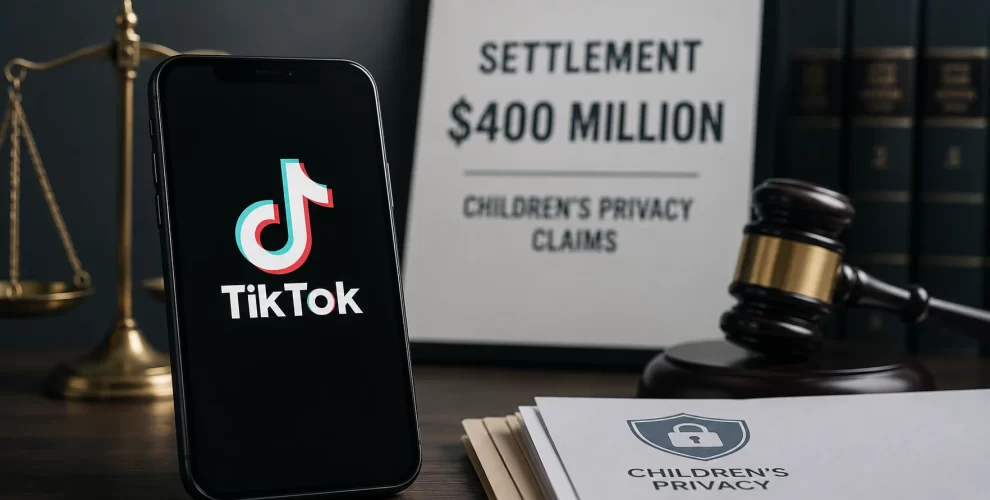
ByteDance, the parent firm of TikTok, has agreed to pay $400 million to resolve a U.S. government lawsuit over allegations that the platform violated children’s online privacy laws.
The case focused on how TikTok handled accounts and personal information belonging to children under 13. The U.S. Department of Justice alleged that the companies collected children’s data without the parental consent required under federal law. TikTok and ByteDance had denied the allegations.
Key Takeaways
- ByteDance and TikTok reached a $400 million settlement with the US Department of Justice.
- The lawsuit was originally filed in 2024.
- The government accused TikTok of violating the Children’s Online Privacy Protection Act, or COPPA.
- The allegations involved collecting personal information from children under 13 without proper parental consent.
- TikTok will pay $300 million initially.
- Another $100 million is tied to the removal of an earlier consent decree involving Musical.ly.
- The settlement resolves the case without TikTok admitting wrongdoing.
Why Did TikTok Agree to Pay $400 Million?
The dispute goes back to a lawsuit filed by the Justice Department in 2024.
Federal authorities alleged that TikTok allowed children under 13 to create regular accounts and collected information from them without first receiving permission from their parents.
The government also accused the company of failing in some cases to properly remove accounts and information after parents requested deletion.
Those allegations centered on COPPA, a U.S. law designed to give parents more control over the information online services collect from young children.
What Is COPPA?
When children under the age of thirteen have their personal information collected online, it is subject to the Children’s Online Privacy Protection Act.
For services covered by the law, companies generally need parental consent before collecting certain personal information from young children.
The TikTok case was significant because the government alleged that the platform knew children under 13 were using the service but did not adequately meet those requirements.
How Will the $400 Million Settlement Work?
The full amount will not be paid in one step.
Under the agreement, TikTok and ByteDance will pay $300 million immediately.
An additional $100 million is connected to the removal of a previous consent decree involving Musical.ly, the short-video app that ByteDance acquired and later combined with TikTok.
Together, the payments make this one of the largest settlements involving alleged violations of U.S. children’s online privacy rules.
Why Is Musical.ly Part of the TikTok Case?
TikTok’s history with children’s privacy regulation predates the current lawsuit.
In 2019, Musical.ly agreed to pay $5.7 million to settle allegations that it illegally collected personal information from children. At the time, the penalty was the largest civil penalty the Federal Trade Commission had obtained in a children’s privacy case.
That earlier case resulted in a consent decree governing the company’s practices.
The latest settlement is therefore connected not only to TikTok’s more recent operations but also to its history with Musical.ly.
Has TikTok Changed Its Child Safety Measures?
Yes. TikTok has introduced additional systems aimed at identifying younger users and limiting how children can use the platform.
Reuters reports that the company has strengthened age-verification systems and employs hundreds of people focused on detecting and moderating accounts belonging to underage users.
The company has also expanded parental controls and other protections for younger users.
These changes do not erase the allegations in the lawsuit, but they show how TikTok’s approach to age verification and privacy has evolved since the case began.
Did TikTok Admit to Breaking the Law?
No.
The settlement resolves the lawsuit, but TikTok and ByteDance did not admit wrongdoing as part of the agreement.
Before the settlement, the companies had denied the government’s allegations.
That distinction matters: paying to resolve a legal dispute is not the same as a court finding that every allegation made against the company was proven.
Why Does the TikTok Privacy Settlement Matter?
The size of the settlement sends a clear message to large social platforms about handling children’s information.
Age verification remains difficult because online platforms must determine whether users are old enough to use their services without unnecessarily collecting even more sensitive information.
At the same time, regulators are putting greater pressure on technology companies to prove that their protections for younger users actually work.
TikTok is not alone in facing that pressure. Child safety, age verification, addictive product design and data privacy have become major regulatory issues across the social-media industry.
Conclusion
TikTok’s $400 million children’s privacy settlement closes a major legal battle with the U.S. government over how the platform handled young users and their personal information.
The settlement also shows how costly children’s privacy failures can become for major technology platforms.
As social networks introduce stronger age checks and parental controls, the bigger challenge will be ensuring those protections work effectively rather than simply existing as settings inside an app.
FAQs
1. Why is TikTok paying $400 million?
TikTok and ByteDance agreed to settle U.S. government allegations that the platform violated children’s privacy rules, including claims involving data collected from users under 13 without proper parental consent.
2. How much will TikTok pay immediately?
TikTok will pay $300 million initially, with another $100 million tied to the removal of an earlier consent decree involving Musical.ly.
3. What law was TikTok accused of violating?
The case centered on the Children’s Online Privacy Protection Act (COPPA), which regulates how covered online services collect personal information from children under 13.
4. Did TikTok admit wrongdoing?
No. TikTok and ByteDance had denied the allegations, and the settlement resolves the dispute without an admission of wrongdoing.
5. When was the lawsuit against TikTok filed?
The U.S. Justice Department filed the lawsuit in 2024 over alleged violations of federal children’s privacy requirements.
6. Has TikTok introduced stronger protections for children?
Yes. TikTok has expanded age-verification measures, parental controls and teams responsible for identifying underage users.