
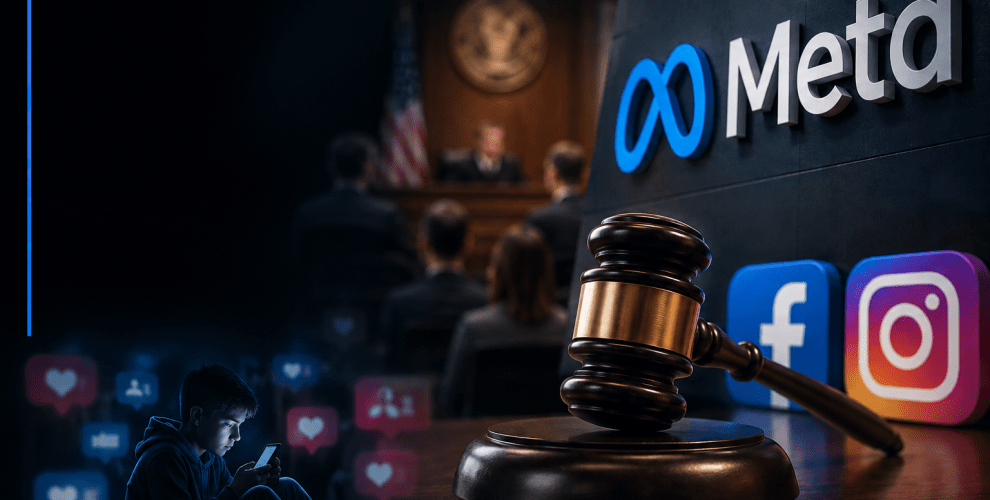
Meta Faces Major Trial Over Claims Instagram and Facebook Harm Young Users
Table of Contents
Meta Faces Major Trial Over Claims Instagram and Facebook Harm Young Users
Meta is facing one of its most important legal battles yet over the way Instagram and Facebook are designed for children and teenagers. A group of U.S. states argues that Meta knowingly built features that encouraged compulsive use among young people while also failing to properly protect children’s data. Meta denies the allegations.
Key Takeaways
- Meta is being sued by a coalition of U.S. states over alleged harm to young users.
- The case focuses on addictive design, child privacy, and platform safety.
- Regulators are seeking both financial penalties and changes to how Instagram and Facebook operate.
- Meta says it has introduced extensive teen safety protections and disputes the claims.
- The outcome could influence how social media platforms design products for minors.
What Is Meta Accused of Doing?
The states claim Meta deliberately used features that keep young users engaged for longer periods.
The allegations include concerns around recommendation systems, frequent notifications, endless feeds, and other design choices that regulators say may encourage repeated use among children and teenagers. The lawsuit also accuses Meta of collecting data from some users under 13 without the parental consent required by U.S. children’s privacy law.
Why Is This Trial Important?
This case could affect far more than Meta.
The states are not simply asking for compensation. They are also seeking changes to the way Facebook and Instagram operate for younger users, including stronger age protections and limits on certain engagement-focused features.
If the court sides with the states, other social media companies could face greater pressure to rethink how their platforms are designed for children.
What Does Meta Say About the Claims?
Meta disputes the accusations and says the case does not fairly reflect the safety measures it has introduced over the years.
The company has added parental supervision tools, teen-focused settings, privacy protections, and restrictions designed to reduce unwanted interactions. Meta is expected to argue that these efforts show it has taken youth safety seriously.
Could Instagram and Facebook Actually Change?
Yes, depending on the final ruling.
The states are seeking measures that could affect recommendations, age verification, data handling, notifications, and other features used by younger audiences. Reuters reported that the requested remedies include removing certain engagement mechanisms and changing how content is recommended to minors.
That means the case could eventually affect what teenagers see when they open Instagram or Facebook and how those apps encourage them to keep using the platform.
How Big Is the Case?
The federal case involves claims from 29 state attorneys general, with California, Colorado, Kentucky, and New Jersey among those leading the trial. The proceedings are taking place in Oakland, California, and are expected to last several weeks. Meta CEO Mark Zuckerberg and other senior executives may testify.
The judge will make the final decision, while an advisory jury will provide a non-binding view of the evidence.
What Happens Next?
The trial will examine whether Meta broke federal and state laws and whether its design choices harmed young users.
A ruling against Meta could lead to financial penalties and new requirements for Facebook and Instagram. A decision in Meta’s favor, however, could make similar cases against social media companies more difficult.
Conclusion
The Meta youth safety trial could become a turning point for social media regulation in the United States. At its core, the case asks a simple question: how much responsibility should platforms have for the way their products affect children?
Whatever the outcome, the trial is likely to shape future debates around child privacy, addictive design, and the responsibility of social media companies.
FAQs
1. What is the Meta youth safety trial about?
The case examines allegations that Meta designed Instagram and Facebook in ways that encouraged excessive use among children while failing to meet some child privacy requirements.
2. Who is suing Meta?
A coalition involving 29 U.S. state attorneys general is pursuing the federal case.
3. Could Instagram and Facebook change if Meta loses?
Potentially. Regulators are seeking changes to youth-focused recommendations, age protections, data practices, and engagement features.