Meta Glimmer AI Model Brings Personal AI Agents Closer to Reality
Meta has introduced Muse Glimmer, a new open-weight AI model designed to run advanced AI agents directly on consumer computers.
The release offers a clearer look at how Meta could turn its vision of personal AI into something people can use on their own devices.
Glimmer contains 30 billion parameters and is based on the technology behind Meta’s more powerful Muse Spark model.
Unlike a closed model that can only be accessed through a company’s services, Glimmer’s weights are available under the Apache 2.0 license. This allows developers to download, modify, and build on the model.
What Can Meta Glimmer Do?
Glimmer is built for AI agents that can handle tasks involving several steps.
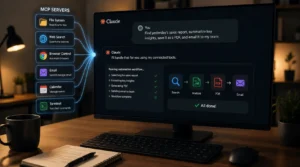
Instead of simply answering a question, an agent powered by the model can use tools, work with files, inspect screenshots, write code, and make changes based on the task it has been given.
The model supports both text and images and was trained using more than 100 languages.
Meta says it can run locally on a Mac or PC equipped with a single consumer GPU.
This local approach is one of the most important parts of the release.
An AI assistant that works directly on your computer could handle personal information without automatically sending everything to a remote server.
A More Personal AI Assistant
Meta sees models like Glimmer supporting everyday tasks such as organizing files, managing schedules, and preparing messages.
Because the model can operate on local hardware, it could eventually support assistants that remain available even when an internet connection is unavailable.
That could make AI more useful for people who want greater control over their personal information.
However, running powerful AI locally also requires suitable hardware and may not offer the same capabilities as larger cloud-based systems.
Zuckerberg’s Personal Superintelligence Vision
The release also connects with Mark Zuckerberg’s broader plans for AI.
He has argued that advanced AI should eventually be widely available rather than controlled by only a small number of companies.
His vision includes AI assistants that could help people with areas such as work, finances, relationships, hobbies, and other daily responsibilities.
Making advanced AI affordable and widely accessible is a major part of that idea.
Glimmer represents one step toward that goal, but it also highlights an important distinction in Meta’s strategy.
Open AI vs. Controlled AI
Meta has made Glimmer available for developers to download and customize, while its more powerful Muse Spark model remains closed.
That difference raises an important question about the future of personal AI.
People may be given powerful AI tools to run themselves, but the most advanced systems could remain under the control of major technology companies.
Conclusion
Meta Glimmer shows how AI could move beyond cloud-based chatbots toward personal agents that work directly on everyday computers.
Its local design, open licensing, and ability to handle multi-step tasks make it an important development.
At the same time, the gap between open models like Glimmer and more powerful closed systems shows that Meta’s vision of widely available personal superintelligence is still evolving.