

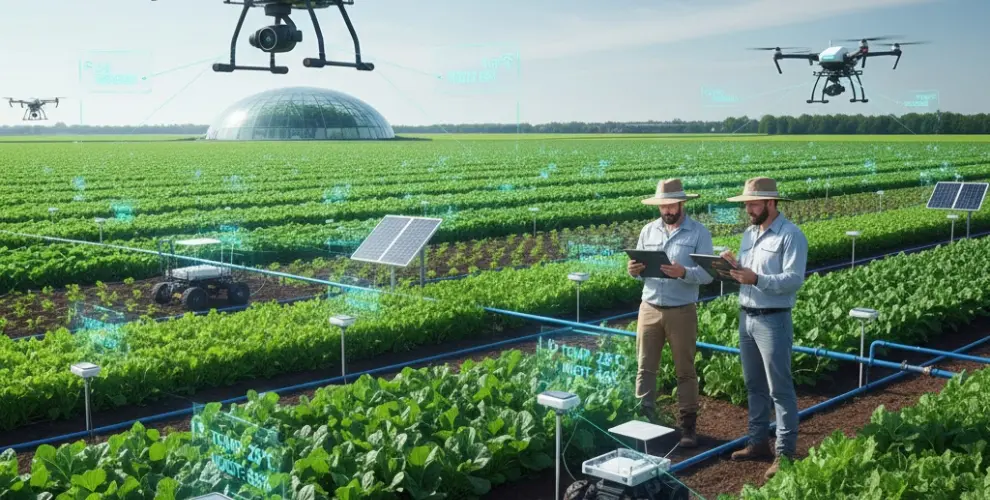
IoT-Driven Farming: How Data and Sensors Are Changing Agriculture
Table of Contents
Introduction
Farming has always been closely linked to nature. Soil quality, water supply, weather, and seasons decide how crops grow.
However, today, farming is undergoing significant changes. Technology is now helping farmers understand their land better and manage it more carefully.
One major change comes from IoT, which connects devices, data, and farmers in real time.
At WikiGlitz, we focus on explaining how such technologies affect real-world industries in a simple and practical way.
IoT-driven farming is one example of how modern tools are improving agriculture by helping farmers reduce waste, save time, and grow healthier crops without complicated systems.
What Is IoT-Driven Farming?
IoT farming means using connected devices to monitor and manage farm activities.
These devices collect information from the field and send it to farmers through mobile apps or computers. This approach is known as IoT agriculture.
In the past, farmers relied mostly on experience and visual checks. While experience is still important, smart farming adds data to support decisions.
Farmers can now see soil moisture, weather changes, and crop health without visiting the field many times a day.
By using IoT solutions, farmers can manage large areas more easily. These systems help farmers work smarter, not harder.
They also reduce human error and help keep farming more consistent across seasons.
How IoT Data Helps Farmers Make Better Decisions
One of the biggest advantages of IoT-driven farming is access to IoT data. This data shows what is happening on the farm at every moment. Farmers no longer have to rely on guesswork.
For example, IoT data can show when soil moisture is too low. This helps farmers water crops only when needed. It can also show when plants need nutrients, helping farmers avoid excess fertilizer use.
IoT farming also helps farmers notice problems early. Changes in plant growth or soil condition can signal stress or disease. With early alerts, farmers can act before damage spreads.
In smart farming, decisions are faster and more accurate. Farmers using IoT solutions can reduce costs, protect crops, and improve yield by taking action at the right time.
Role of IoT Sensors in Modern Agriculture
IoT sensors are the backbone of IoT agriculture. These small devices are placed in soil, fields, and greenhouses to collect data throughout the day.
Common IoT sensors measure soil moisture, temperature, light levels, and air conditions.
Among these, humidity sensors are very important. They measure moisture in the air and soil, which strongly affects crop health.
High humidity can cause fungal diseases, while low humidity can slow plant growth.
When IoT sensors detect sudden changes, they send alerts to farmers. This allows quick action.
By using IoT sensors with smart farming systems, farms can automate watering, reduce manual checks, and protect crops more effectively.
Smart Farming Applications Across Different Crops
Smart farming can be applied to various types of crops. Vegetable farms use IoT farming systems to manage irrigation schedules.
Fruit farms use sensors to track weather conditions and protect crops from frost or heat.
In grain farming, IoT data helps farmers plan planting and harvesting times. In greenhouses, IoT solutions control temperature, lighting, and airflow automatically.
Because IoT agriculture works in many environments, it suits both small farms and large agricultural operations.
This flexibility makes smart farming useful across regions and climates.
IoT and Organic Farming: A Better Balance
Organic farming focuses on natural methods and reduced chemical use.
IoT supports this approach by providing accurate information. Instead of adding extra water or fertilizer, farmers can act based on real data.
With IoT sensors, farmers can monitor soil health and environmental conditions closely. In organic farming, balance is very important. Too much water or nutrients can harm crops and soil.
IoT agriculture helps farmers maintain this balance. Humidity sensors help control moisture levels and reduce disease risk.
By combining organic farming with IoT farming, farmers can improve crop quality while protecting nature.
Importance of Humidity Sensors and Environmental Monitoring
Humidity sensors are essential tools in modern farming. They measure moisture levels in the air, which directly affect plant growth.
High humidity can lead to mold, while low humidity can cause plant stress.
Using IoT data, farmers receive alerts when humidity levels move outside safe limits. This allows quick action, such as adjusting irrigation or ventilation.
Smart farming systems often combine humidity sensors with soil and temperature sensors.
In IoT farming, this complete environmental monitoring helps farmers reduce losses and protect crops from sudden weather changes.
Challenges and Limitations of IoT in Agriculture
Although IoT solutions offer many benefits, they also have challenges. The cost of setup can be high for small farmers. Devices, software, and maintenance require investment.
Internet access is another issue in rural areas. Without stable connectivity, IoT data may not update properly. Farmers may also need basic training to understand dashboards and alerts.
Even with these challenges, IoT agriculture continues to grow. As technology becomes cheaper and easier to use, more farmers are adopting smart farming tools.
Future of IoT-Driven Agriculture
The future of IoT farming looks strong. Advanced tools like automation and data analysis will make farming more accurate and efficient.
Governments and agri-tech companies are investing in IoT solutions to improve food security.
As IoT agriculture develops, farms will become more connected. Smart farming will help farmers adapt to climate change and rising food demand.
Over time, IoT farming will move from an optional tool to a standard part of agriculture.
Conclusion
IoT-driven farming shows how technology can support agriculture without replacing farmers’ knowledge.
By using data and sensors, farmers gain better control over soil, water, and crops.
At WikiGlitz, our goal is to explain such technologies in a clear and useful way. IoT in farming is not about complexity. It is about smarter decisions and better results.
As adoption grows, IoT-based farming will help create a more sustainable and informed agricultural future.
Frequently Asked Questions
1. What is IoT-driven farming in simple words?
IoT-driven farming uses connected devices and sensors to monitor farm conditions. It helps farmers understand soil, weather, and crop needs using real-time data.
2. How does IoT data help farmers every day?
IoT data helps farmers decide when to water, fertilize, or protect crops. It reduces guesswork and improves daily farm management.
3. Are IoT sensors useful for small-scale farmers?
Yes. IoT sensors are increasingly affordable and can help small farms save water, reduce costs, and improve crop quality.
4. Can IoT help in organic farming?
Yes. Organic farming benefits from IoT by monitoring soil and climate conditions naturally without overusing chemicals.
5. Is smart farming expensive to start?
Initial costs exist, but long-term savings from reduced waste and better yields make smart farming a valuable investment.
Want to keep up with our blog?
Our most valuable tips right inside your inbox, once per month.


WikiGlitz Team
Welcome to WikiGlitz, your ultimate destination for tech insights and innovation. Our expert team is dedicated to delivering free resources and professional advice on various technology topics, including Artificial Intelligence, Cyber Security, Cloud Computing, and more. We strive to empower our readers with up-to-date information and practical guidance, ensuring you stay ahead in the rapidly evolving tech landscape. At WikiGlitz, we are passionate about making complex technology accessible to everyone. Our team of seasoned experts curates content that is both informative and engaging, helping you understand and leverage the latest tech trends. Whether you're a tech enthusiast or a professional, WikiGlitz is your go-to source for reliable, expert-driven content. Join us on this journey to explore and embrace the future of technology.