

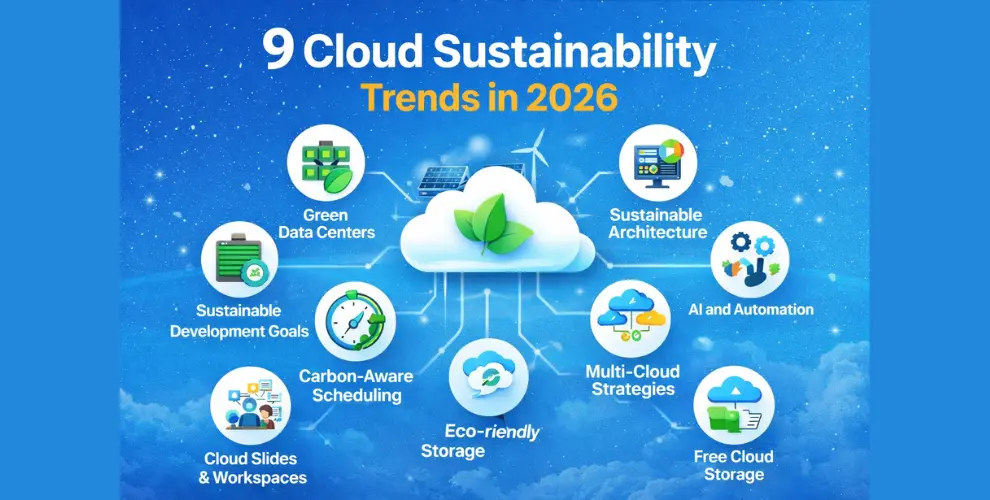
9 Cloud Sustainability Trends in 2026
Table of Contents
Introduction
At WikiGlitz, we continue to provide valuable insights for our readers through our website about emerging technologies, especially advancements in cloud computing and digital innovation.
As businesses worldwide increasingly depend on cloud technologies, sustainability has become a major priority in shaping future cloud infrastructure and operations.
In 2026, organizations are not just adopting cloud services for scalability and performance but also to support environmental responsibility and reduce carbon footprints.
Cloud sustainability focuses on energy-efficient infrastructure, responsible resource management, and alignment with global environmental goals.
In this article, we explore the top cloud sustainability trends transforming industries and redefining how organizations use cloud technologies responsibly.
1. Green Data Centers and Energy Efficiency
One of the most important trends in cloud sustainability is the rapid development of green data centers.
Cloud providers are heavily investing in renewable energy sources such as solar, wind, and hydroelectric power to operate their data centers.
Major providers like Google Cloud Platform and GCP are leading initiatives toward carbon-neutral and carbon-free operations.
These companies use AI-driven cooling systems, energy-efficient hardware, and advanced infrastructure optimization to reduce electricity consumption.
Green data centers significantly reduce emissions caused by large-scale cloud computing operations while maintaining high performance and reliability.
This trend supports global environmental commitments and improves operational efficiency for businesses.
2. Sustainable Cloud Architecture Design
Modern organizations are adopting sustainable architecture when building cloud-based applications. Sustainable cloud architecture focuses on reducing resource waste and improving computing efficiency.
Key practices include:
- Serverless computing models
- Auto-scaling infrastructure
- Efficient workload distribution
- Reduced idle resource usage
By designing applications that consume only necessary computing resources, companies can reduce both operational costs and environmental impact.
Sustainable architecture also ensures long-term scalability while supporting responsible digital transformation.
3. Cloud Adoption Supporting Global Sustainability Targets
Cloud technology is playing a crucial role in helping organizations achieve global sustainable development goals.
Businesses now use cloud platforms to monitor environmental performance, measure carbon emissions, and analyze sustainability data.
Many enterprises deploy cloud-based dashboards to track progress toward specific SDG goals, improving transparency and accountability in environmental reporting.
Cloud platforms also support climate research, sustainable supply chain management, and environmental risk assessment.
By leveraging cloud technologies, organizations can align business growth with global sustainability initiatives and regulatory requirements.
4. Growth of Eco-Friendly Storage Solutions
Data storage consumes significant energy, making efficient cloud storage solutions essential for sustainability.
Cloud providers are introducing optimized storage technologies that reduce energy consumption while maintaining high security and performance.
These solutions include:
- Automated data lifecycle management
- Intelligent storage tiering
- Reduced redundancy storage models
- Energy-efficient hardware infrastructure
Even consumer-focused services such as iCloud are adopting renewable-powered data centers and improved storage optimization methods.
These innovations help minimize environmental impact while meeting growing data storage demands.
5. Carbon-Aware Workload Scheduling
Carbon-aware computing is becoming a major innovation in cloud sustainability. Cloud systems can now monitor carbon emissions across regions and schedule workloads accordingly.
This approach allows cloud platforms to:
- Run processes in low-carbon regions
- Schedule tasks during low-energy-demand periods
- Optimize server utilization
- Reduce overall emissions
Tools provided by Google Cloud Platform and GCP help organizations track their environmental impact and optimize operations to reduce carbon footprints.
This ensures sustainable computing without affecting performance or productivity.
6. Multi-Cloud Strategies for Sustainable Operations
Organizations are increasingly adopting multi-cloud strategies to improve sustainability and operational efficiency.
Instead of relying on a single cloud provider, businesses distribute workloads across multiple platforms.
Benefits of multi-cloud sustainability strategies include:
- Selecting energy-efficient data centers
- Reducing infrastructure risks
- Optimizing resource usage
- Improving disaster recovery capabilities
Multi-cloud environments allow organizations to choose providers that support environmental standards while ensuring flexibility and reliability in cloud operations.
7. AI and Automation Driving Sustainable Cloud Operations
Artificial intelligence and automation are transforming cloud sustainability by improving resource management and reducing energy waste.
AI-powered systems can analyze usage patterns and optimize computing resources in real time.
Automation in cloud computing environments enables:
- Predictive resource allocation
- Reduced idle capacity
- Optimized server performance
- Improved infrastructure efficiency
These intelligent systems help organizations achieve sustainability goals while improving operational productivity and cost efficiency.
8. Sustainable Collaboration and Digital Workspaces
Cloud-based collaboration tools support sustainability by reducing the need for physical infrastructure and travel.
Businesses are adopting cloud platforms to enable remote work, digital documentation, and virtual communication.
Organizations use cloud-based tools such as cloud slides for presentations, digital meetings, and collaborative workflows.
These technologies reduce paper usage, lower transportation emissions, and improve workplace efficiency.
Digital collaboration environments contribute to sustainable business operations while enhancing productivity and flexibility.
9. Expansion of Free and Accessible Cloud Services
The growing availability of free cloud storage services is accelerating sustainable digital adoption.
Businesses and individuals can now store data and manage applications without investing in energy-intensive physical infrastructure.
Advantages include:
- Reduced hardware production
- Lower energy consumption
- Cost-effective data management
- Sustainable IT infrastructure
As cloud providers expand accessible services, sustainability becomes more achievable for small businesses, startups, and individual users.
Why Cloud Sustainability Matters for Businesses
Cloud sustainability is no longer optional—it has become a strategic necessity. Organizations that adopt sustainable cloud practices benefit from:
- Lower operational costs
- Improved brand credibility
- Regulatory compliance
- Long-term scalability
- Alignment with global SDG initiatives
Businesses that integrate sustainability into cloud strategies not only protect the environment but also enhance competitiveness and innovation.
Future Outlook of Cloud Sustainability
Looking ahead, cloud sustainability will continue to evolve with advancements in technology and infrastructure. Future developments may include:
- Carbon-neutral cloud services
- Circular data center models
- Advanced energy-efficient hardware
- Sustainability-focused cloud innovation
- Stronger integration with global sdg goals and environmental policies
Cloud providers will continue investing in renewable energy, efficient infrastructure, and intelligent resource management to support sustainable digital transformation.
Conclusion
In the end, at WikiGlitz, we remain committed to sharing reliable and valuable insights about advancements in cloud computing and digital innovation as we continue to provide information for our readers through our website.
Cloud sustainability is shaping the future of technology by enabling businesses to grow responsibly while supporting environmental protection and global sustainability initiatives.
As cloud technologies continue to evolve, we will keep delivering expert-driven content to help our readers stay informed about emerging cloud trends, sustainable computing practices, and future digital transformation strategies.
Continue following WikiGlitz for more updates and insights on cloud technologies and computing advancements.
FAQ’s
1. What is cloud sustainability?
Cloud sustainability refers to using cloud computing technologies in an environmentally responsible way by reducing energy consumption, carbon emissions, and resource waste. It focuses on green data centers, efficient infrastructure, and sustainable digital operations.
2. How does cloud computing support sustainable development goals?
Cloud platforms help organizations track environmental data, reduce carbon footprints, and optimize energy usage. Businesses use cloud technologies to align operations with global sustainable development goals and achieve long-term environmental sustainability.
3. Why are green data centers important in cloud sustainability?
Green data centers use renewable energy, energy-efficient hardware, and advanced cooling systems to reduce environmental impact. Providers like Google Cloud Platform (GCP focus on carbon-free operations to support sustainable cloud infrastructure.
4. Is cloud storage more sustainable than traditional data storage?
Yes, modern cloud storage solutions are more energy-efficient than traditional physical storage because they optimize resources, reduce hardware requirements, and use renewable-powered data centers.
5. What are the benefits of sustainable cloud solutions for businesses?
Sustainable cloud solutions help businesses reduce costs, improve operational efficiency, support environmental responsibility, meet regulatory requirements, and align with global SDG goals.
Want to keep up with our blog?
Our most valuable tips right inside your inbox, once per month.
Related Post




WikiGlitz Team
Welcome to WikiGlitz, your ultimate destination for tech insights and innovation. Our expert team is dedicated to delivering free resources and professional advice on various technology topics, including Artificial Intelligence, Cyber Security, Cloud Computing, and more. We strive to empower our readers with up-to-date information and practical guidance, ensuring you stay ahead in the rapidly evolving tech landscape. At WikiGlitz, we are passionate about making complex technology accessible to everyone. Our team of seasoned experts curates content that is both informative and engaging, helping you understand and leverage the latest tech trends. Whether you're a tech enthusiast or a professional, WikiGlitz is your go-to source for reliable, expert-driven content. Join us on this journey to explore and embrace the future of technology.